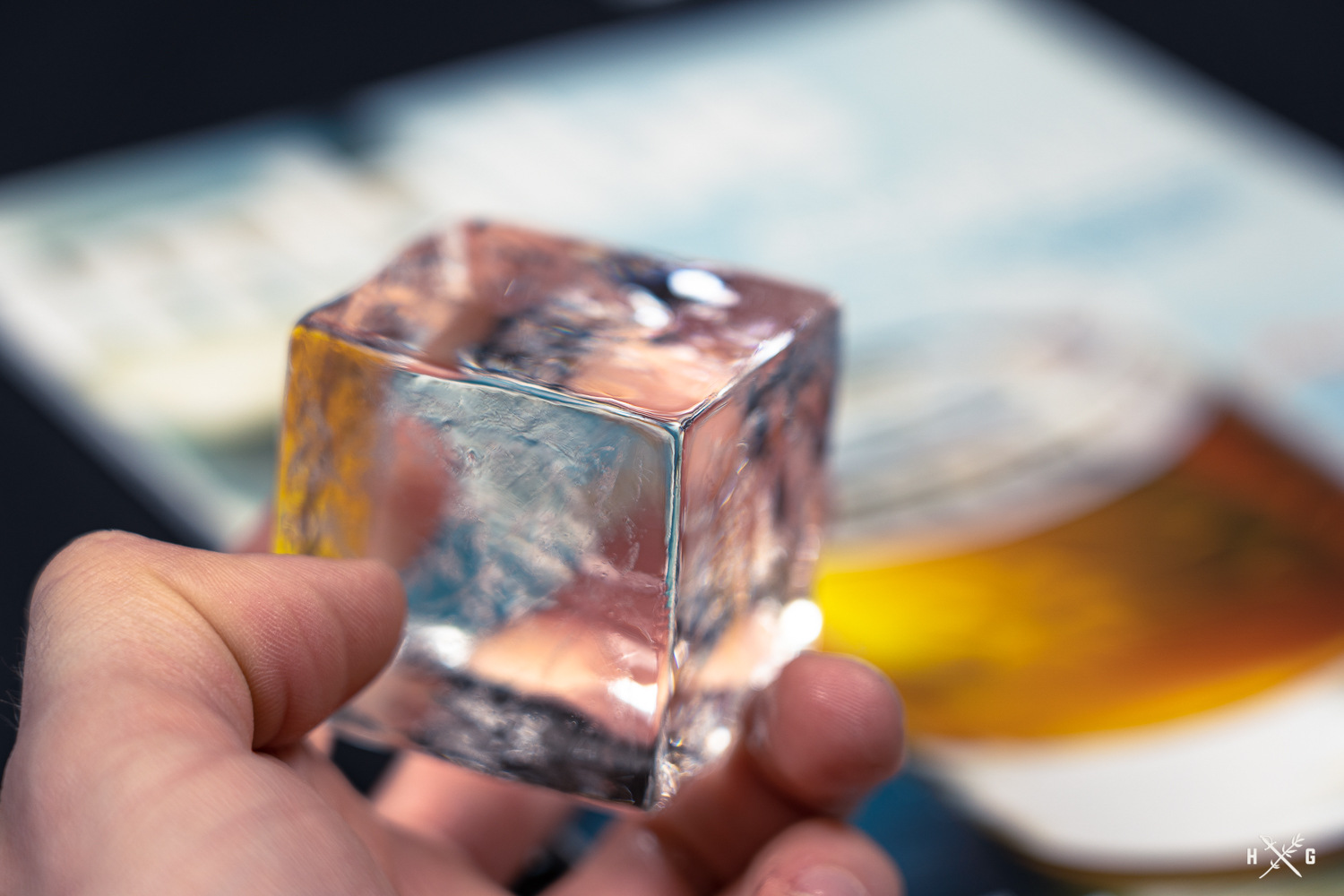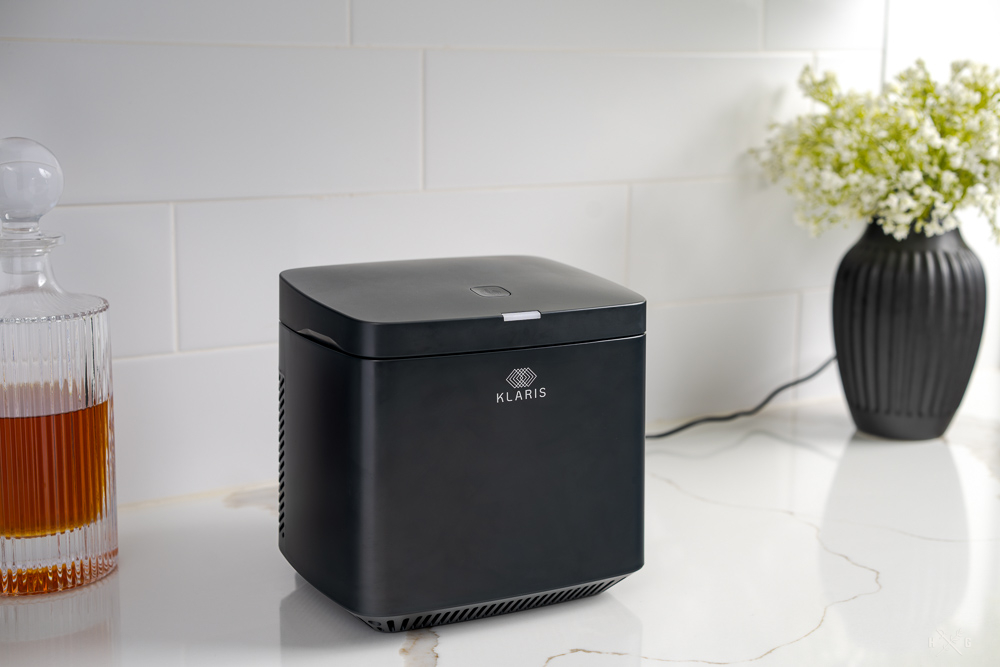
A hands-on look at Klaris’ compact clear ice maker after three months of real-world use.
It’s hard to believe that it’s been two years since I reviewed the original Klaris. In that time, it has run hundreds of cycles on my home bar, consistently producing crystal-clear cubes. It’s the clear ice maker that finally made me give up my silicone freezer molds. Since its release, I’ve stayed in touch with Klaris founder, Chase, providing occasional feedback and input on potential accessories and new products.
When Chase contacted me back in May to see if I’d be interested in checking out the new Klaris Mini before its release, I was excited to see what he had been working on. It arrived in late summer, and I immediately swapped it into my daily routine so I could compare it directly with the Original.
I’ve been using the Klaris Mini for the past three months, and this review will cover the pros and cons, how it differs from the Original, price, build quality and real-world performance.
Overall, here’s what to expect from the Mini:
- Faster cycle time
- Improved standby mode
- Smaller footprint
- More affordable
- Same clarity and consistently clear ice
Table of Contents
- Intro
- Overview
- Klaris Mini versus Original Klaris
- Ice Making Process
- Aesthetics
- Who It’s For
- Upkeep and Maintenance
- Price
- Build Quality and Size
- Conclusion (Plus 10% Discount Code)
Full Review: Klaris Mini Clear Ice Maker
Intro
To give a proper review of the Klaris Mini, I think it’s helpful to see how it stacks up to the Original Klaris, but also to understand that it isn’t designed to replace the Original or make it obsolete. Rather, it’s an additional option that includes some refinements and is aimed at a different user. For many, the question will be about whether they should buy the Original Klaris or the Mini, so throughout this review I’ll point out the key difference that might impact the decision.
(If you’d like to read an extensive review of the Original as well as my full interview with Chase discussing how he went from prototype to product, click here.)
Overview
Here’s a quick recap on how clear ice is made. Creating the large, clear cocktail cubes really comes down to just one thing—slow directional freezing. That’s why the only silicone freezer molds that work are the ones that are insulated on all sides except the top.
With those molds, the water freezes from the top down, pushing the impurities (dissolved gases and minerals) into the lower portion of the mold.
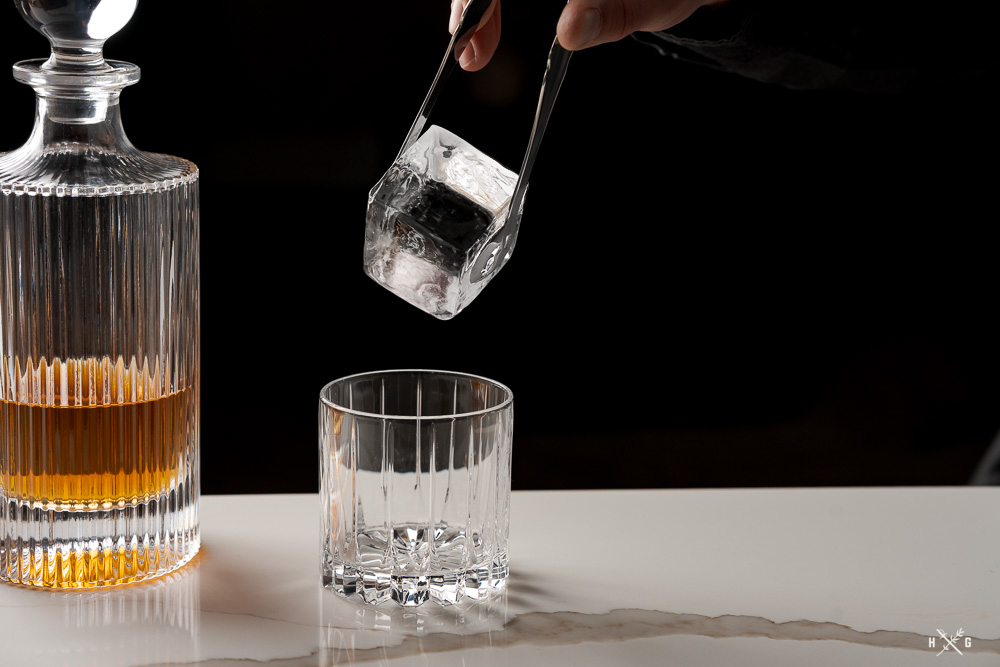
Both Klaris models use the same underlying technology: thermoelectric cooling, a mold, and a set of sensors that control the freeze cycle. It’s a simplified explanation, but it’s ultimately what sets Klaris apart from traditional freezer molds.
The Klaris’ ice mold rests in the freezing chamber, freezing the water from the bottom up. The units have a probe sensor that detects when the cubes form, putting the unit into a standby mode. This standby mode keeps the remaining liquid water in a super-chilled state until you retrieve the mold and dump the excess water. It’s not only faster than using the freezer—it’s more forgiving if you don’t retrieve the ice immediately.
Klaris Mini versus Original Klaris
When I first received the Klaris Mini, I was surprised at how compact the unit is when compared to the Original. Sure, the Mini produces two cubes versus the Original’s four, but I think this is a tradeoff that most users will accept.

What I appreciated about the Original Klaris is it allowed me to reclaim space in my freezer, however that came at the cost of losing some space on the home bar. The size of the Mini is comparable to a toaster and it can easily fit on a counter alongside other kitchen appliances. Because it’s shorter than the Original, it will even fit if cabinets are above—something that I couldn’t do with the Original. The Original required 19.5″ of clearance to open the lid and the Mini only requires 12.5″.
Aside from the quantity of cubes each model produces per cycle, it’s worth noting that the Mini only offers a mold for 2″ cubes, while the Original offers 2″ cubes as well as long Collins spears. The units’ interior freezing chambers differ in size, so the molds are not interchangeable between models.
Ice Making Process
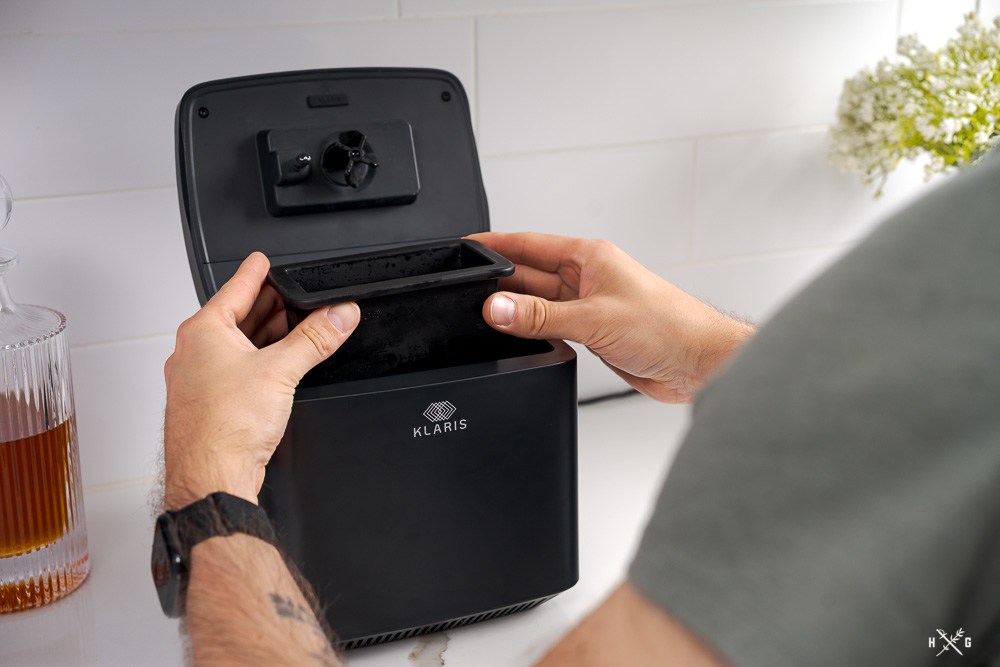
Making clear cocktail cubes with the Klaris Mini is simple and straightforward. Fill the mold up to the fill line, close the lid, and press the button. It’s nearly impossible to mess up, but there are a few tricks I’ve picked up over the past two years of using the Original Klaris and the past few months of using the new Klaris Mini.
I like to fill the mold while it’s in the Klaris. This will help prevent any water from splashing on the exterior of the mold, which can make it difficult to remove from the appliance after the freezing process completes. The fill line is marked in the mold, and it’s been made more visible on the Mini. You’ll want to fill the mold with the clear plastic insert in place, and I find that using the top handle portion of a wooden spoon to tap on the insert and release any air bubbles works great and doesn’t damage the inserts.
Next, close the lid and press the power/action button. You’ll hear the exhaust fans for the unit spin up and the lights will change from soft white to a saturated blue and begin to pulse.
Klaris claims the ice will be ready in 8-10 hours with the Mini (the Original takes 8-12 for 4 cubes), and I find that my ice is ready around the 7.5-8 hour mark. The time it takes will vary slightly based on the ambient temperature of the room. Ideal operating temperatures are 68°F-74°F, which is a reasonable range that most people keep their thermostat set. Give the unit about 8″ of clearance on all sides to prevent heat buildup around the vents. Even an ambient temperature slightly higher can add hours to the cycle time.
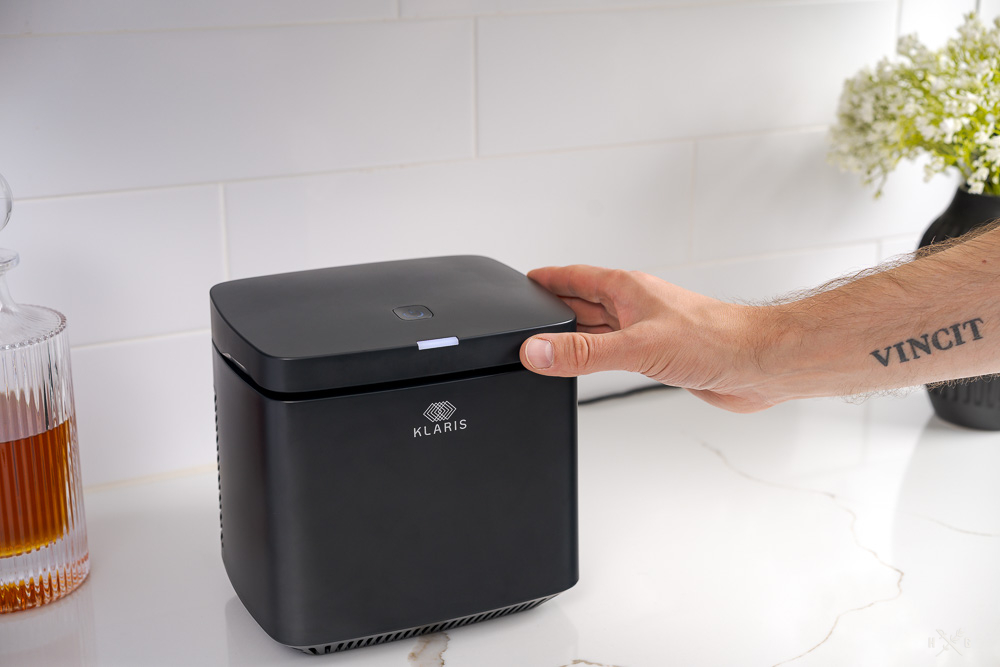
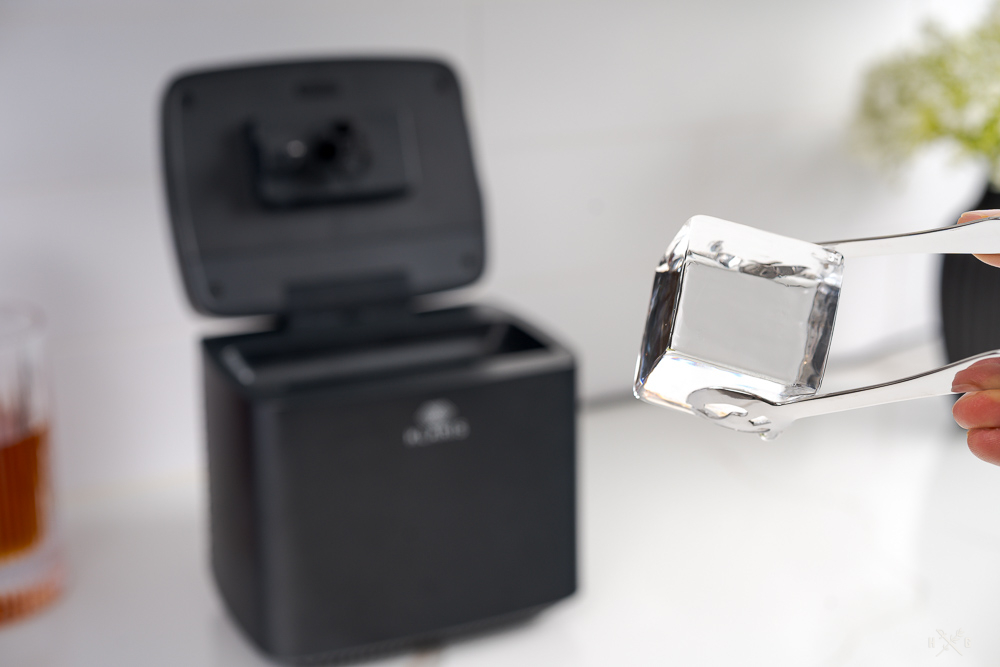
Upon completion, the unit will beep once and the indicator lights will change from blue to green. The resulting cubes are crystal clear and the quality I’ve come to expect from my Klaris.
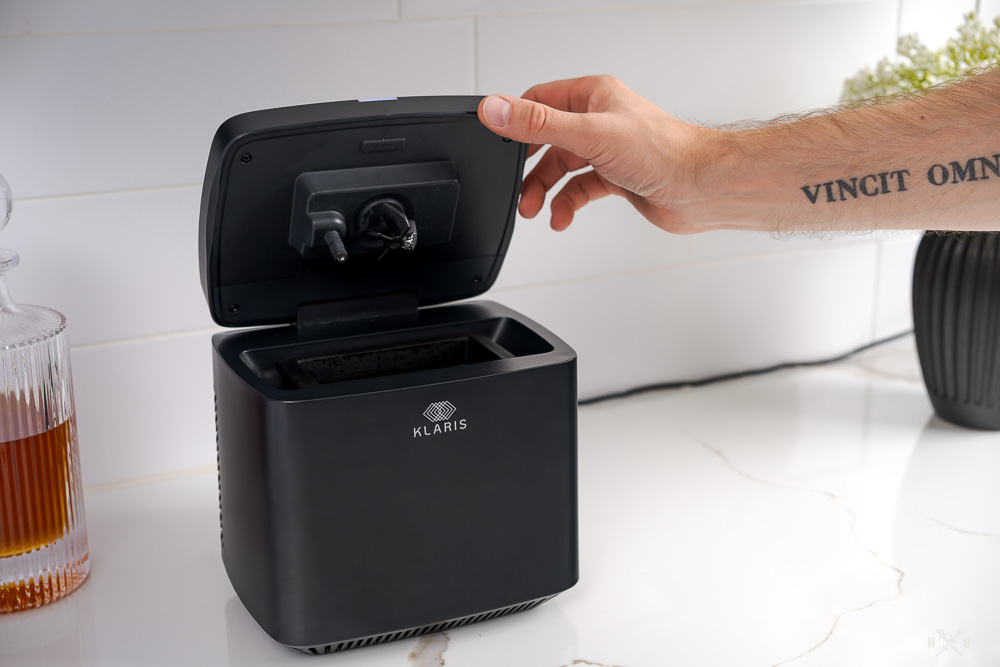
The Original Klaris features an OLED screen that displays the time elapsed for the current freeze cycle. With the Mini, the LED progress bar feels like a loose estimate—it gives you a sense of progress but doesn’t communicate granularity the way the OLED did. That said, the standby mode on the Mini is greatly improved due to a more precise PID controller—in my testing I let the unit run a full 24 hours (including freeze time) resulting in minimal effect on the cubes’ shape.
It’s suggested to remove the cubes as close as possible to the cycle completion (1-2 hours), but all that will happen if you don’t is that the top surface of the cubes will become a bit deformed and wavy. I find the easiest remedy is to “polish” your cubes on a stainless steel pan after they’ve tempered. (Tempering just means you allow the cubes to warm a bit. If you don’t wait, you’ll likely crack the ice from the thermal shock. The cubes should look clear and wet, not frosty.)
My only usability request is a louder or repeating completion alert. The Mini emits a single long beep when the ice is ready, and it’s easy to miss if you’re in another room. A repeat-every-10-minutes option, ideally with a mute toggle, would be a welcome upgrade. Not critical, but useful. I also wish it would beep when the cycle begins, just to provide a little extra feedback. That said, the standby mode functions very well, so that’s just me being particular.
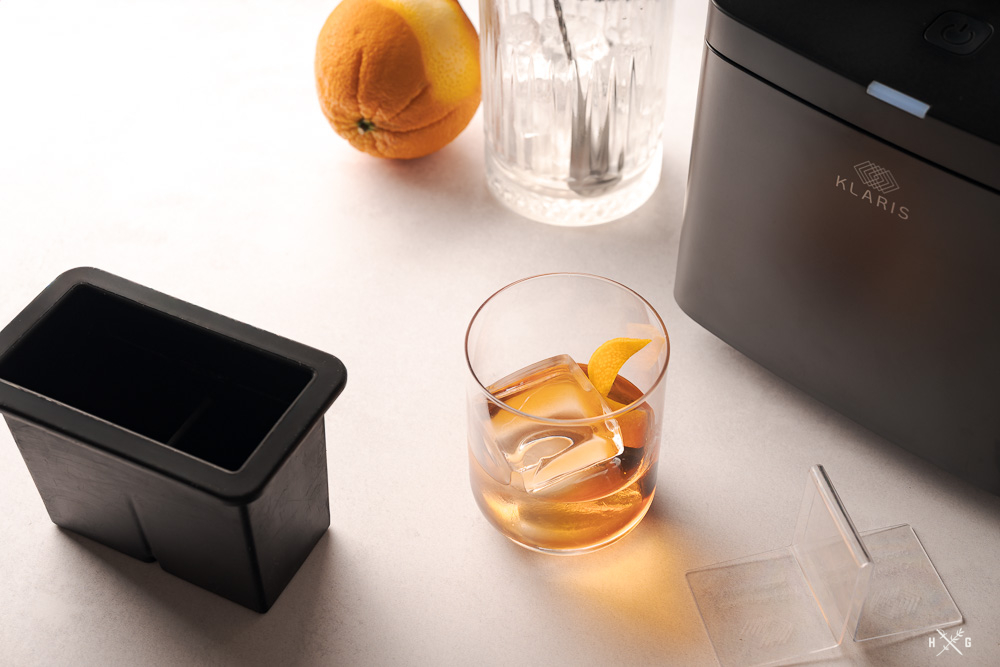
Retrieving the ice is simple. Remove the mold from the unit and wait a few minutes to allow it to release easier. Invert the mold and push the cubes out from the bottom. If the mold is difficult to remove from the unit, it’s possible that you dripped some excess water between the thermal plate and mold—unplug the unit and wait until it releases freely rather than forcing it. If you’re running another freeze cycle, be sure to wipe the mold and thermal plate dry before starting the new cycle.
Both the Original Klaris and Mini feature a delayed start mode. It’s a nice option, but I haven’t used it much. The Original allows you to delay the start by 2, 4, or 8 hours, while the Mini simply offers a 4-hour delayed start.
However, with the speed of the Mini and its improved standby time, it’s easy to start a cycle at night before bed, harvest the ice in the morning, and then start a new cycle that’ll be complete when you get home from work. This will yield four cubes a day, which you can store in the Klaris containers, keeping them separated.
Aesthetics
With the Mini, the previous black and aluminum aesthetic is gone, in favor of a sleek matte black look. The subtle curves and angles on the unit give it a more modern vibe while also feeling less industrial. It’s a welcome change, as the aluminum on the Original could easily collect fingerprints and smudges.

The Mini features simple one-button operation with a power/action button that changes from blue to green based on the ice status. An LED strip on the lid functions as a progress bar for the current freeze cycle.
Both the power button and the progress bar illuminate in 4 colors to relay the unit’s status.
- White – Power On and Ready
- Blue – Freezing In Progress
- Green – Cycle Complete/Standby
- Red – Timeout Error
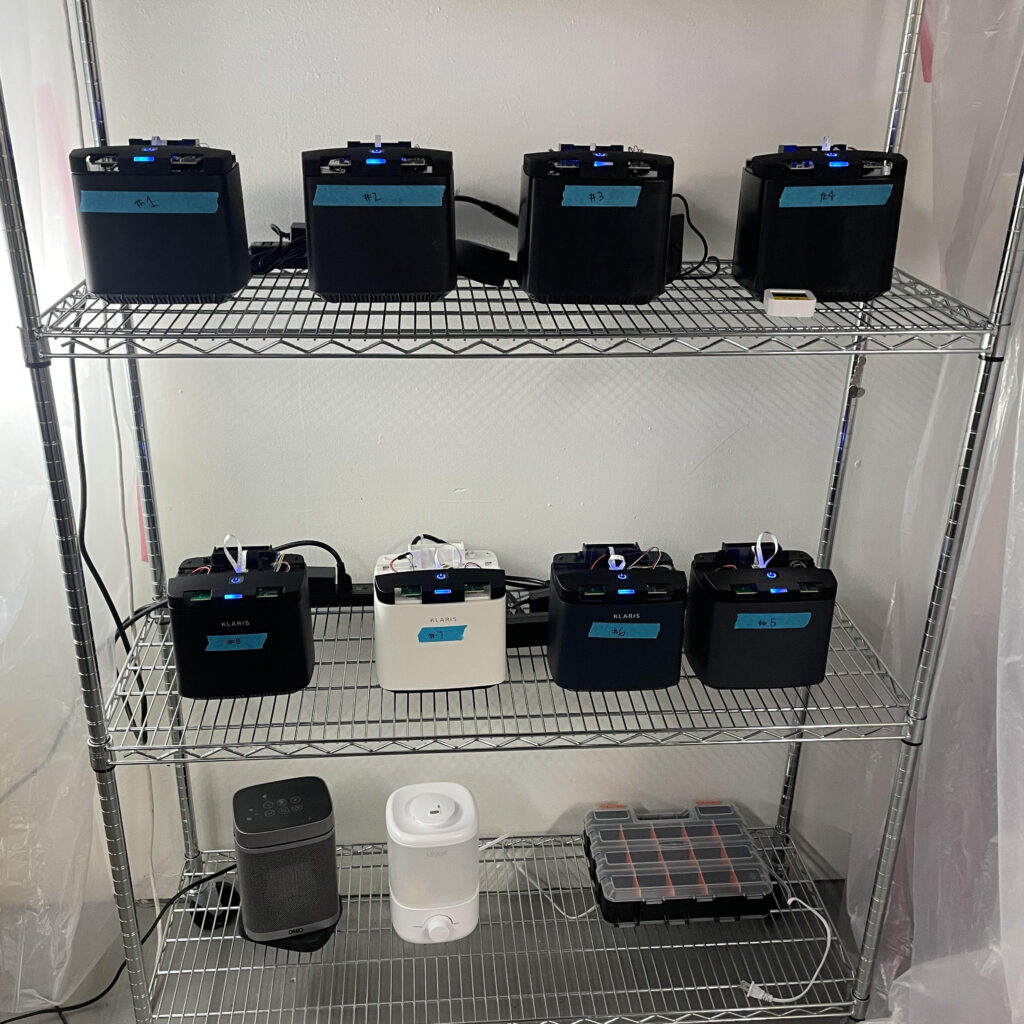
Operational noise ties into the overall experience, so I’ll include it with the aesthetics. During the freezing process, the Klaris Mini will exhaust warm air out of the back of the unit while drawing it through the intakes on the bottom of the other three sides. The fan noise is a gentle whirl and it’s not significantly different than that of the Original. At some point in the process you may notice it gets slightly louder when the agitator on the lid spins up, but it’s not loud enough to be a nuisance.
Who It’s For
Neither the Original or the Mini are geared towards commercial (restaurant/bar) use. However, I would imagine that there is a bar somewhere using the Original model for their ice program. With the Mini’s focus on smaller size, the resulting lower ice yield wouldn’t make it practical for large-scale ice production, but it’s more than capable of producing enough ice for the even an avid home cocktail enthusiast. However, if you regularly make cocktails for more than two people at a time, the Original’s four-cube output is likely the better long-term fit.
Upkeep and Maintenance
The Klaris is designed to do its thing without requiring much from the user. At most, make sure the mold gets an occasional cleaning to ensure the ice its producing remains clear. In the event of any issues with the unit, Klaris offers a 1-year warranty as well as a 45-day refund policy.

Price
When I first reviewed the Original Klaris, I figured the $549 price tag would deter some—that’s an investment for clear cocktail ice. That said, I think the Klaris Mini being priced at $299 hits a sweet spot. For the clear ice enthusiast, even investing in the old-school silicone freezer setups with a few molds could cost a couple hundred dollars. At that point (IMHO) it’s worth it to spend a little more on the Klaris, freeing up freezer space, not to mention the added convenience of not having to fuss with pulling molds from the freezer before they completely freeze.
Build Quality and Size
The build quality of the Klaris Mini is solid. It’s made primarily of hard plastic, and doesn’t feel cheap. The only moving parts accessible to the user are the lid hinge and the agitator fan. The hinged lid is more rigid on the Mini—the lid on the the Original had a little bit of lateral play. Overall, it just feels more sturdy.
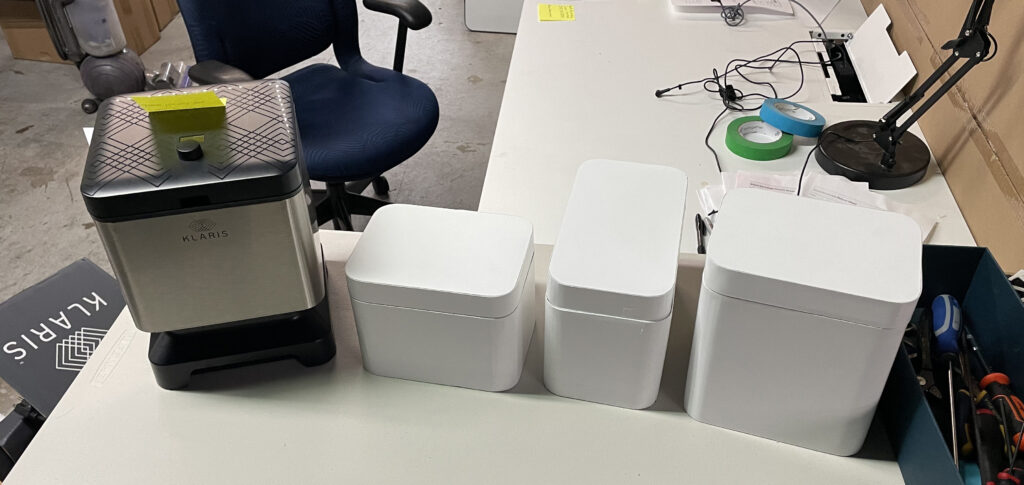
The Original is 9″ x 9″ while the Mini is 8″ x 8″. They also shaved 4 pounds off the overall weight (9 pounds versus 5 pounds). I realize the weight may not matter to most, but having this smaller unit does mean that it’s much easier to transport. Perfect for packing into a tote and taking to a weekend getaway so you can have clear cubes.
A few other notes on build itself… The unit seems to feature an improved non-slip base, keeping it securely in place on the counter. The Original featured an attached cable with ground, and the Mini opts for a removable AC adapter that’s about 5′ in length. While the AC adapter fits securely, I do wish the connection had a slightly more positive lock. The power brick portion contains the electrical prongs, so you’ll want to plug it into the lower socket on a vertically-oriented outlet to prevent it from taking up two sockets.

Conclusion
The Klaris Mini is reliable, simple to use, and priced perfectly. While it has different features and output capacities than the Original, I don’t think anything sacrificed is significant enough to deter someone from purchasing it. With its smaller size and more affordable price, I could easily see this unit becoming more popular than the Original. After roughly three months of frequent use, I’ve had no issues with performance or cube consistency.
If you want more cubes per cycle or spear molds, the Original is still the better buy. But for most home bartenders, especially those limited on counter space, the Mini is the sweet spot of convenience, speed, and price.
Now I just need to build a second home bar so I have an excuse to keep both machines running.
PS — If you’re wanting to purchase a Klaris, I have a special discount code that will give you 10% off. Simply use this link or use code HUMBLEGARNISH10.
The discount is only available when purchasing directly from Klaris, but if you’re in a pinch and need that 2-day Amazon Prime shipping, it is available there too!
Additional Resources
- Klaris Website
- How to Make Clear Ice at Home
- The Ultimate Clear Ice Mold Review
- Camper English’s Book – The Ice Book
I created The Humble Garnish because I’m passionate about cocktails. Occasionally, I am provided with products for review or other perks. Many product links on this site are affiliate links that give me a very small kickback, and costs the buyer nothing extra. For example, as an Amazon Associate, I earn from qualifying purchases after a link leading to Amazon is clicked. Other links may earn me affiliate commissions as well. This helps offset the cost of creating content for the site – things like camera gear, software, alcohol, glassware. I have at times accepted and at other times declined free products. I promote what I love and use, and rarely will write about a product that I don’t appreciate or own. If I don’t like a product or service, I often simply choose not to write about it.
– Andrew